
.svg)
Understanding the Impact of the 2026 Public Charge Rule
Overview
On July 20, 2026, the U.S. Department of Homeland Security (DHS) issued a Final Rule on Public Charge, followed by updated policy guidance on August 18, 2026. Effective September 18, 2026, immigration officers will have broader discretion to consider means-tested public benefits, including WIC, when evaluating certain green card or visa applications.
Key Takeaway for WIC Staff:
WIC eligibility rules have not changed. WIC staff should focus on core services and refer families to legal professionals for immigration advice.
What is Public Charge?
"Public charge" is an assessment used by U.S. immigration officials to evaluate whether an applicant is likely to become dependent on government support. For many years, the programs included in this assessment were cash assistance and long term care. However, in 2019 the first Trump administration added SNAP, Medicaid and housing assistance. These additions were reversed by the Biden administration in 2021 to revert back to the long-standing policy. But now the second Trump administration has ruled that all means-tested (based upon income) public programs are allowed to be considered for public charge.
The new rule now allows WIC to be considered for Public Charge
The most recent final rule allows immigration officials to consider participation in WIC from September 18, 2026, and on, but not participation from before that. The administration is expected to publish additional guidance for immigration officers to use in their assessments, but as written presently, immigration officials are allowed discretion to determine what is included in their public charge assessments, so individual cases may vary. Important Note: This means that receiving WIC does not necessarily trigger an automatic denial. Immigration officers are to evaluate the "totality of circumstances," including age, health, income, skills, and affidavits of support.
Who needs to worry about Public Charge?
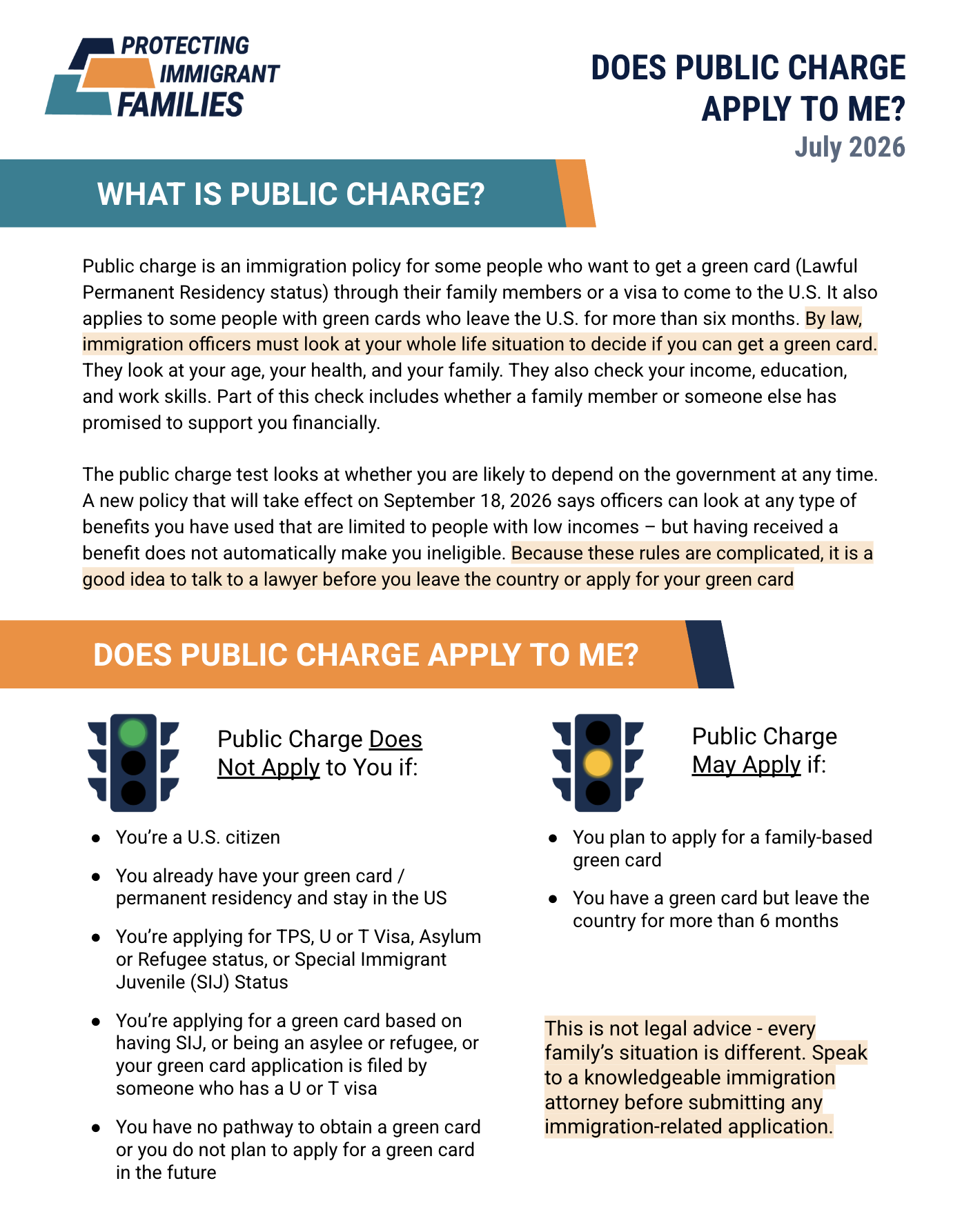
The public charge test applies to a small subset of visa and green card applicants. Many immigrants, including U.S. citizens, refugees, and asylees, are not impacted. A helpful resource for participants to determine for themselves if they are included in this group is the Protecting Immigrant Families’ factsheet: Does Public Charge Apply to Me?
What About Food Banks?
Food pantries and community food banks are private or charitable organizations. They are not government-funded means-tested benefits and are not considered in public charge determinations. They are important community resources that should be a safe place to refer individuals in need of food assistance.
Is this rule really going to go into effect?
There are many advocates working to overturn this rule. Legal challenges are possible and could delay implementation, as happened in 2019.
This rule change will likely cause eligible families to avoid WIC due to confusion or fear. A similar "chilling effect" occurred during the 2019 policy changes. Researchers documented reduced participation in nutrition and health programs and increased low birth weight rates, even among families exempt from the rule. The American Academy of Pediatrics (AAP) notes that these deterrence effects harm entire households, including U.S. citizen children.
Staff can support participants by providing clear, accurate, and consistent information, following guidance Washington State Department of Health WIC team.
If a participant expresses concern about the new rule:
- Listen without judgement: Emphasize that your role is to support the family's health and nutrition, not to judge or track immigration status.
- Share facts: WIC eligibility requirements have not changed regardless of citizenship status.
- Avoid assumptions and legal advice: Never assume a participant's status or attempt to interpret immigration law.
- Refer to credible resources: Direct families to their immigration attorney or credible legal resources for guidance as needed.
- Respect their choice: Support whatever decision the participant makes regarding their benefits.
Phrases that may be of use:
- "Because immigration policies are complex and personal, I cannot give you advice. I can help you with your WIC eligibility and benefits, and I can connect you to credible legal resources for specific immigration questions."
- "We want to support whatever decision is best for your family. Would you like a list of free or low-cost legal resources?"
Resources
Legal Referrals for Participants:
- Protecting Immigrant Families (PIF) factsheet: Does Public Charge Apply to Me?
- Washington State Immigration Services (OAG): Recommended sources from the Washington State Attorney General
- AILA Find an Immigration Lawyer Tool - searchable database of registered immigration lawyers
- Northwest Immigrant Rights Project (NWIRP) assists individuals with an income of 200% or less of the Federal poverty level with a variety of immigration matters
- WA Immigrant Solidarity Network Hotline: Call/Text 1-844-724-3737
Staff References & Policy Updates:
- DHS Federal Register Announcement
- PIF maintains an updated FAQ document tracking related legal and policy developments: https://pifcoalition.org/resources/library/2026-dhs-public-charge-rule-faq/